Tuesday, February 21, 2017

Once Upon a Time in Texas - The Line in the Sand


         February is the anniversary month of the famed Alamo siege. The fortress actually fell March 6th, but about half of the “thirteen days of glory” took place at the end of February, 1836. It also happened to be a leap year. As a result, every February I tend to get into an Alamo frame of mind. It just so happened that last year, while working on another Alamo writing project, I was reminded of Moses Rose, a Yellow Rose of another sort, who was one of the few men who managed to escape the death trap in Bexar. 

William P. Zuber, the original author of the Line in the Sand legend 

         Back in 1871, San Jacinto veteran, William Physick Zuber, penned an account his family supposedly heard from the lips of Moses Rose shortly after his escape. This story, later printed in the 1873 Texas Almanac, became the source of the legendary tale of Lt. Col. William B. Travis drawing "the line in the sand." This phrase has since entered our lexicon - it's certainly frequently every Texas Legislature - and has been filmed more than a few times in various fashions. Historians still get in knock down drag out fights over whether it actually happened or not. I tend to think that it didn’t but Moses Rose has been proven to be a real person, and as far as we can tell, did indeed escape the Alamo sometime during the siege. Survivors such as Susanna Dickinson describe Travis drawing the line but not until after they were asked about it after the Zuber account was published. By then the survivors could have been saying just about anything to keep getting attention in their old age. Or there may indeed have been something to the story. More recent evidence has cropped up that seems to indicate the story might have been told by Rose to other people before Zuber wrote down his version. But this evidence is based on the memory of people trying to remember a story many decades after they supposedly heard it. Flimsy, at best.
         The “why’s and why not’s” of whether it actually happened would take up a book and I’m not going to go into it here. When I recently read the original version as printed in the Texas Almanac, I was stuck by how poorly Zuber's story is told. The speech given by Travis is obviously mostly Zuber’s invention. It doesn’t sound much like anything Travis wrote. It rambles all over the place and doesn’t have the poetry or inner fire we know Travis capable of. It’s no St. Crispin Day’s Speech. And if you have ever read the young colonel's incredible appeal for help to “The People of Texas and All Americans in the World”, Zuber's own version of Travis giving a speech falls flat. But perhaps Travis said something a bit like it, just more eloquently – if the legend of the Line is true. I doubt we will ever know. But reading about the Line made me want to write my own version of the tale. I would strive to make it as accurate as I could. Kind of a strange standard for something that likely didn't happen at all. But even if it's a tall tale, it has still become an important American myth, and it's certainly a symbol of what the men and women at the Alamo essentially did decide to do. I think it is always a story worth retelling. I am especially happy that famed historical artist (and THE best artist of the Texas Revolution) Gary Zaboly has allowed me to use a few of his incredible pictures to illustrate my take on the classic tale. J. Frank Dobie describes the Line in the Sand as "a line that not all the piety nor wit of research will ever blot out. It is a grand canyon cut into the bedrock of human emotions and historical impulses." I agree. I hope you enjoy my version of this mythic moment. 


         Artist Gary Zaboly's fantastic portrait of William B. Travis based on eyewitness accounts


A Line in the Sand

For days they ringed us with their flame,
For days their swarming soldiers came,
The battle wrack was gory.
We perished in the smoke and flame,
To give the world their traitor shame,
And our undying glory.
– Robert E. Howard

         The young man stepped into silence louder than cannon fire. Powder stained fingers rubbed through red beard stubble before pocketing worthless letters promising aid. Gravel crunching under his tread evoked dirt thudding on coffin lids. The garrison awaited him across the plaza in the cold shadow of the Alamo church; a worn stone cross, a crumbling memory of Spain, sprouting from the ground in the midst of them. He read the stress and marrow-deep exhaustion in each set of the jaw, in the powder reddened eyes. Some nodded off where they stood. More vibrated like violin strings, adrenaline electrifying their veins. Each expected a surprise cannonade to drop out of the sky any moment.
         How do you tell your men they will all be dead in a day or two? His stomach twisted. He did not ask for this command. He wanted to ride in the cavalry again, craved the freedom of lighting quick attacks, the wind in his ears. He was a firebrand, an instigator of revolution – of action. Instead he was now a rat beating his head against a cage.
         Little Enrique Esparza stared at the round faced man in the short tailed blue coat, a red sash wrapping a somewhat portly waist, eyes glowing iced fire. The boy’s mother squeezed a calloused hand around her son’s. Susanna Dickenson’s sad blue eyes looked down at her Angelina sleeping in her arms. A cat’s eye ring once belonging to the young commander dangled on a string about the child’s neck. Enrique and the Losoya boy shared their fright in an uneasy glance. Once playmates in the streets of Bexar, their families now huddled together. Gentlemen in battered top hats and dusty coats stood alongside rough n’ tumbles in buckskin. Slaves stood alongside their masters, not behind, feeling a sudden bizarre sense of equality in the face of annihilation.

Gary Zaboly's beautiful depiction of the types composing the garrison

         Travis breathed deep and thrust his shoulders back. He smiled tightly at little Enrique. I am never going to see my little boy again. It took him almost a minute to find his voice standing before the army of soon-to-be corpses. He choked on his words. Bowie watched through crusted eyes from a cot of fever stained sheets. He alone of the sick and wounded asked to be carried out to this meeting. At long last the rough-edged voice of William Barret Travis shattered the funerary silence.
          “Friends, as I am sure most of you are aware, another messenger arrived earlier today. He will be our last. The news is bleak as death. No help is coming. It seems none can be bothered to ride to our aid or those who wish to cannot now make it through the strangle hold of the Army of Operations. I also sent out one of our Bexareños to Santa Anna’s camp last night. As our hope of reinforcements has continued to dwindle, I felt it my duty to see how I might save the lives of the wounded and non-combatants. I...I put out feelers for an honorable surrender.” Shame seared his face. “But ‘Surrender at discretion or be put to the sword' is still the answer. After what that butcher did to the people of Zacatecas, he’ll show no mercy to us. Santa Anna will now attack as soon as possible. He must sack the Alamo simply to retain some semblance of glory. Once his commanders learn that an honorable surrender was under discussion they will demand he accept to avoid a pitched battle. Almonte and Castrillon are gentlemen even if their generalissimo is not. There would be no bloodshed and El Presidente would not win the sanguine laurels he so craves. Remember, he was blooded in his youth at the Battle of Medina. He was tutored in butchery by the Spaniard Arredondo. Half the male populace of Texas wiped out, women outraged and enslaved, Bexar devastated.  This was the school of Santa Anna. This is what we can expect for San Felipe, Gonzales, Nacogdoches and the rest. I believe our gothic enemy will launch upon us in two or three days. We must fight. And we must die. 
            Yet we are still faced with a choice. When the attack comes, a handful of us may be able to break out and escape in the confusion. Singly we might slip over the wall tonight and creep through the guards. Some could get through. Most would not. The Mexicans will be looking for a desperate escape attempt and any groups will be cut to pieces. But still, there is a chance that a few of us can make it through. So, it is up to each of us to decide - make a break for it or stay till the bitter end.
            As for me… I will stay. I did not ask to be here anymore than the rest of you. If Col. Neill had not been called away, I would likely be with the army back east. Yet destiny has placed me here, alongside you. I would have it no other way. It has been the greatest honor of my life to serve as your commander and I am so very, very proud of the high-souled courage with which you have manned these walls day after day. I am humbled to stand before you.  And now I must choose: my life or my duty. I choose the duty God has seen fit to rest upon me. I choose to bleed the enemy so he can only limp toward the homes of our friends and families. I choose to die a free man striking a blow against the tyranny of this so-called Napoleon of the West. I choose to fight to the death, so that the convention at Washington may have enough time to declare independence and create a Constitution. That would make this all worthwhile. For me. To know my heart’s blood cemented the drafting of a free government for a republic of heroes. To know my corpse was a stumbling block on the road to our settlements. To know that when my country cried out for succor, I answered the call and showed the world how a free man dies…to show how a free man lives.The Alamo cannot hold. But we few, we may still hamstring this murderous giant and send him crashing headlong to destruction. Like the Spartans at Thermopylae, shoulder to shoulder, brother beside brother, we can die so that our neighbors may live.”

                       Gary Zaboly's beautiful dramatization of the drawing of the Line
         

            His sword flashed lightning in the quickening sunset. The garrison lurched at the explosion of action. Sword point speared the earth and dredged a long line in the dirt before the entire mass of listeners. The shimmering blade wavered through their misty eyes.
            “Back in December when Old Ben Milam called for volunteers to assault Bexar, so many had already left for home. Still, he drew a line in the dirt and roared out “Who will go with Old Ben Milam into San Antone?”  An army of three hundred patriots answered the call. Ben died a martyr. But in the end, the line he dug was a path to victory. We may be martyred here, and may our bones reproach our country for its neglect, but the sacrifice we make will not be in vain. Our blood shall emancipate Texas and may posterity and our country do our memory justice.  So, my friends, make your choice. Between escape or immortality. Between escape or victory.”
         Silence reigned. The tricolored flag emblazoned with two stars, representing Tejas y Coahuila, flapped in the chill breeze above them. Leaves rustled on the giant cottonwood towering above that corner of the fort. Time stood still. 
         At last, a form slowly drifted forward from the ranks. Young Tapley Holland, body shaking but his boyish face a-light with some inner fire, stumbled out towards the line. “I am ready to die for my country,” he managed to choke out. He crossed over.

Travis and the Band of Brothers by Gary Zaboly 

      Crockett adjusted his iconic hat. “Well, hell. Alright boys, time to go ahead and vote with your feet!” He crossed over. Yet the great rider of comets seemed pale around the gills and his crooked smile hung a bit looser. More followed silently. Eyes and hearts overflowed, choking all speech.  Families moved with their menfolk. Slaves, for reasons known only to their hearts, crossed over. Bowie watched propped up on one arm. His voice gurgled phlegm as he tried to speak but a violent fit of coughing knocked his frail body back. Gasping, he stared up at the stars popping out in the dusk and remembered a night chasing Comanche and the songs of an old vaquero in all that lonesome dark.
         “And heroes of a million generations march across the unending fields of sky, lighting their lanterns to birth the stars.”
         He motioned to a few of his men, waved his arm towards the line. They bent down and lifted his rickety cot. They crossed over. Battle-scarred frontiersmen sobbed as they watched. Little Enrique later recalled, “My heart was in my mouth. My eyes were like coals of fire; but I would stay and listen.” Bowie was a god to him. Now the boy watched the remains of his hero as if he were a fragile, skeletal Christ pulled down from the Cross. Bowie's wandering eyes looked up into eternity, the silver voice of the vaquero in his ears. He saw Ursula wearing a crown of stars. She leaned over him and breathed her love into his lips. He slept.
         “You don't seem to be willing to die with us, Rose.” Crockett and the rest gazed at the one person who had not crossed over. A Frenchman with a heavy gray beard shook his head.
         “No, I am not prepared to die. If I can do anything to avoid it, I shall certainly do so.” 
         Crockett shook his head. “It cain’t be avoided, friend. I’ve been in many’s the tight scrape and escaped with little of my hide left to my name, but this is more’n likely the end. Might as well join up with us and give our executioners what-fer.”

                                        Moses Rose contemplates by Gary Zaboly

     Moses Rose shook his head again. He'd been contemplating slipping off for days now. His mind swept over the great vistas of his past – decorated by Napoleon himself for bravery, wading through the blood of Spain and Portugal, tramping into Russia, crawling back over the bodies of friends in one long road of frozen death. He would continue to sell his sword but he’d have no more friends or loyalties or illusions. Yet something had always held him back from fleeing the Alamo thus far. But now Travis had essentially given him permission to leave without slinking off like a snake. 
          “I’ve often done much worse than to climb over that wall.” All the eyes now on him made him sweat. He couldn’t look at them. He wasn’t a coward but nor was he a patriot. This fight was never really his. Travis and his histrionics got on his nerves anyway. What did that young fool know about the crash of massive armies, of the grinding slaughterhouse of war, of picking up random body parts that were once your friend? He surged with a sudden tide of anger against Travis, against all the staring eyes.There was no glory here. He picked up his musket and walked over to the wall. He climbed to the top. He looked back briefly. Everyone still watched in grim silence. Moses Rose crossed over and the new born night swallowed him up.
         Travis sheathed his sword. “God and Texas” he pronounced barely above a whisper. He gaze lingeringly over his compañeros. Then he turned and quickly walked back to his quarters. He sat in the dark alone till Joe stepped in and lit a candle. The young colonel shook himself free of his meditation and reached for his volume of Sir Walter Scott. He meditated on the line - “Is death the last sleep? No, it is the last and final awakening.” The flickering candlelight would burn long into William Barret Travis’ last night upon earth.
         The garrison outside had gone back to their posts or to try their best at getting some sleep. Crockett ambled over to the stunned Mrs. Dickinson. “Well, ma’am, I just wanted to thank you for doing me the kindness of scrubbing my laundry yestertiddy. It was a job well done. Looks as if it were none too soon neither.  I'll be looking proud as a peacock when I meet my maker. But I tell you, ma’am, I think we had better just march out and die in the open air. I don’t like to be hemmed up...”

......“When Santa Anna and Castrillon were planning the assault, Santa Anna declared that none of the Alamo defenders should survive. It was then inevitable that the fort could hold out but little longer, and Castrillon was persuading the commander to spare the lives of the men of the Mexican Army. Santa Anna was holding in his hand the leg of a chicken, which he was eating and, holding it up, he said: “What are the lives of soldiers but so many chickens?”
         - Fernando Urissa, Aide-de-camp to Santa Anna, Texas Almanac, 1859


article copyright Ben Friberg, 2017

Sunday, October 23, 2016

Go West Young Man!


"For always roaming with a hungry heart, much have I seen and known...my purpose holds to sail beyond the sunset, and the baths of all the western stars, until I die." - Tennyson, Ulysses.

Captain's Log - 10/19/16 - Journey to the Northern Fortresses

      In the good ol' days that everyone longs for because they never actually lived them, the original real estate owners of this vasty republic were fenced out of their own backyards by brittle treaties and a string of fortresses manned by boys. Here the line between "civilization" and "savagery" was drawn with sword and tomahawk as the Stone Age fought a long defeat with Modernity, finally bowing to our numbers, our science and, primarily, our germs. Though I am passionate student of history I had never visited these garrisons of ghosts. So this past week I headed out to the horizon to stretch my horizons with my parents and rediscover a window in our great state's past.

      We headed out on a golden morning from our home in the hills, stocked up like a conestoga wagon with an ice chest or three, packed tight with picnic supplies to brave the prairies ahead. We drove past the beekeepers of Llano and honey-golden flowers blazing in dew and sunbeams. Creeks gradually dried up turning into orange ribbons of gravel as the odometer ticked off the miles. Lush waves of grass groomed the bellies of brown and black horses grazing the day away. Eventually we passed up the old ghost town of Pontotoc. These days it's known mostly for it's cornucopia of wild flowers bedding down in front of the ruins of an old Academy every Spring. However, tragedy has struck and the old ruins sitting there since 1882 are now gone. Gone. I don't know know if they were mowed down by a scythe of high winds or collapsed under their own weight. I could handle that, I guess. But I will be furious if I learn that the property owner bulldozed them because of insurance reasons. Seeing them gone was a punch in the gut. Here's a few pictures I took about five years ago to give you an idea of what has been lost.


Another Texas Roadside destination vanishes, victim to the ravages of time. RIP Pontotoc Academy. You survived typhoid epidemics, fires, and 130 years of progress to provide me and my camera some great afternoons. Here's a link to the Handbook of Texas Online page about Pontotoc and San Fernando Academy. 

As we traveled onward, the country side continued to dry up and take on a harsher appearance. The few homes dotting the countryside were built of some reddish stone, mostly empty and crumbling into ruins. We were driving through a countryside pock marked with skeletons. The terrain became generally rugged except for the occasional creek valleys where fields, pecans and oaks painted a pastoral scene. Small herds of Appaloosa horses clipped the high grass and soaked up the sun. We could still see the full moon racing alongside us, faint and transparent in the noon sky as onion paper in a Bible. Then as we neared Brady a gigantic gravel factory rose up out of the hells it dug, spewing man made mountains of gravel and dirt to pile up like the ancient pyramids. A blight and a curse upon the land. Progress.


 We went on through Brady, skirting north of the lands where Conquistadors searched for silver and preached the Good News with fire and sword. They left their own fortress there after being driven out by the Comanche. 


I will post more about this particular spot on a future blog about James Bowie and his search for the famous San Saba Silver Mines. But here are a few pictures from a trip I made a few years ago to those stubbles of stone that some say bear the mark of Bowie upon them. 


Within about an hour we past the Santa Anna mountains between Coleman and Brownwood. These two mesas provided a primo lookout point for Texas Rangers during the Indian Wars. You can see for miles and miles in every direction over the flat lands that surround it. There's a local legend that a band of natives once lived at the mountain's feet, living a life of peace and plenty far away from the wars in the eastern part of the state. At some point a white woman was brought captive to this tribe and taken to wife by the Chief. She in due time bore him a beautiful daughter that became the most sought after flower amongst that small tribe. Her mother died of heartache, I suppose because she couldn't get over being a slave, and was buried on top of the mesa. When the young girl came of age she had her heart set on marrying a brave from her tribe when the bluecoats finally came rushing in an apocalyptic wind upon their settlement. The battle waged back and forth in the shadow of the mesas and the dust drank deep from the gore of both sides. When it became apparent that the Bluecoats may not win, they asked for the daughter of the white captive in return for leaving the tribe from further attack. The tribe declined for she had never know the society of the white eyes and this was her home. The battle recommenced. The chief sent the young maiden to the top of the peaks to watch over the surging tide of battle and pray to the Great Spirit to save her people. To her despair, her mother's people won and most of the tribe fell to the sword and bullets of the white eyes. But rather than be dragged into the world of the white man, the maiden jumped from the cliffs and embraced the rocks below, entering a new world with her people in the afterlife. 

Such is the legend. 

As we neared Abilene, yellow fields of bitterweed engulfed us. Good thing there aren't much in the way of dairies up here. Bitterweed turns the milk sour if cows eat it. I thought it was a good symbol of how barren and rugged the land was becoming - nothing but bitterweed oceans and mesquite under a wide open sky. As we drove into Abilene, I regaled my parents with stories of my college days here, pointing out landmarks and the stories that lay behind them. I also started out my career as a news photographer here, so there were many stories of the adventures of a poor photog in this city of the plains. Though we'd been snacking the whole trip up, we decided we needed some real grub and pulled into Joe Allen's for a fill-er-up.


I had never eaten here in my college days but I had heard mostly good things about the place. They did good yeoman's work. The pork rib was one of the best I've ever had. Tender, moist and well seasoned with a dry rub that wasn't too salty and was impregnated with a nice smoky flavor. I'm pretty sure it was mesquite since that's the wood dujour out here. That's all there is. 


The brisket was moist yet bland with a nice bark but was, frankly, pretty disappointing. The sauce was a good one though - tangy and sweet perfectly balanced. It made a perfect marriage with the brisket chopped into little chunks, mixing up the sauce with the moist meat and bark. My parents had the chopped beef sandwiches, so I think they got the superior form of brisket served there. 


The sides were good, nothing special. The bread was homemade and heavenly. I could have eaten a meal of bread there with nothing else and been perfectly satisfied. All in all, it's a good place to eat, you just need to know what to order. So, order either a chopped beef sandwich or some ribs and bread. ;) I've heard from locals that service has had issues in the past but we got our food almost immediately and the server was a nice, conversational young man. So if you have tried it before and been disappointed, might want to give it another go. 


After filling our bellies with some good beef, we continued our trek to our first official historical stop of the day: Frontier Texas!


Frontier Texas! is a very well put together history of the West Texas area from Abilene on up to the Fort Belknap (Graham, Texas) area. This region saw an incredible amount of colorful characters live, love and die within its epic confines. Comanches and Kiowas are the primary focus in regards to the Native Americans, but the museum does delve into the prehistoric past with a broader range of native peoples who called this area home at one time. Many arrowheads and other examples of American Indian technology abound. Holograms of actors rise up like dreams over campfires giving informative speeches to the viewer on the life of the character being played. Frontier legends Cynthia Ann Parker and Britt Johnson make an appearance. You are introduced to many folks you've never heard of before and more than a few that you have if you have ever watched westerns. Quanah Parker, Wyatt Earp, Doc Holliday, Big Nosed Kate, Pat Garrett, Bat Masterson and other western legends all passed through this area. It's an utterly captivating historical panorama that will take you hours to wade through. I highly recommend it if you are ever in the area. 


Comanche Buffalo headgear and weapons. Imagine a screaming warrior coming at you wearing that thing on his noggin.


This war shield is decorated with the scalps of three women killed in a raid.


A grim display of the buffalo slaughter that took place in this area back in the 1870's. Millions of buffalo once roamed these plains. Within little less than a decade almost all of them were completely wiped out.


This mountain of skulls actually sent a wave of sadness through me when I saw it. The wanton destruction man is capable of never ceases to surprise me or fill me with loathing.


This Sharps rifle killed 20,000 buffalo, even possibly the last wild white buffalo sighted in Texas. It's hard to contemplate one instrument of death killing that many magnificent creatures just for their hides.


The Sharps belonged to J. Wright Mooar, who came down this a-ways from Dodge City, cleaned the area out of buffalo and stayed in Scurry county to become a rancher. Scurry county is also the county where he killed the last wild white buffalo in Texas. His memoirs are a great source of information upon the how the west was won. He became a respected pioneer but I still say bad cess to him for doing his best to put an entire species on the brink of extinction and the greed that fueled him.


Below is a picture of the beautiful purple crowned prairie grass waving in the West Texas breeze outside the museum. My mind's eye dreamed up a green ocean of the stuff, violet capped waves glistening as far as the eye could see. You just don't see images like that anymore as you drive about America. I regret sometimes being born in this age where so many of the world's wonders have been eaten up by "civilization." Progress. I certainly appreciate the modern medicine and technological wonders that go along with this day and age but why couldn't we have the technology and the scenery?


The last stop of the day before the hotel was Fort Phantom Hill. Interestingly enough, the Fort lay just about a hundred yards past the small lakeside cottage my friends and I used to party at during our college days. It still looks more or less the same, though it was hard to tell as I had never seen the place during daylight. Brought back fond memories of misadventures that later blossomed into stories that I still love to tell. 

Though it has its fair share of ghost stories, Phantom Hill wasn't named after spooks but was named after the fact that what looks like a hill from far away, fades away the closer you approach to it. The bluecoats came here in 1851, picking this spot because of it's higher elevation and it's proximity to the Clear Fork of the Brazos River, which has been dammed up and is now Lake Fort Phantom. Soldiering has never been an easy life and it was even more brutal soldiering on the Texas frontier. Here the young men and handful of officers' wives endured all the harsh extremities that Texas can throw at you. Northers blew in, freezing them and their animals to the marrow, while in summer the temperatures reached in excess of 100 degrees. Imagine marching around in that stifling inferno while wearing wool uniforms. Rain was mighty scarce - just like today - and with almost 300 soldiers stationed on this spot, there wasn't near enough grass to feed all their horses and work animals. Hail, tornadoes, ice and snow and the eternal howling wind drove the White Eyes mad. Rampant illness borne of malnutrition ran like wildfire through the fort. The water tasted bad and the only good water they could find was in a small spring four miles away. The fort's well ran dry more often than it stayed wet. With all this misery it's a good thing there were relatively nothing but good relations between the BlueCoats and the native peoples for that first year or so. Few episodes of violence reared their head and the Comanches met them mostly on friendly terms. The famed Comanche war chief Buffalo Hump regularly visited. He would later appear in Larry McMurtry's Lonesome Dove series. Other visitors represented the Kiowa, Lipan, Apache, Wichita and Kickapoo tribes. The Blue Coats' only enemy here was Texas herself.

That was for the first two years. Then in 1853, everything began to unravel. Comanche attacks began. Wagon trains sacked, pioneers scalped, women kidnapped and outraged. As the Indian attacks escalated, the government decided it would be a good idea to switch over to mounted cavalry divisions. The soldiers at Fort Phantom were infantry mostly. Little cavalry. And you can't chase a Comanche on foot.


Finally in 1854, three or so years into its existence, the fort was abandoned. The commanding officer at the time, Newton C. Givens, as a parting gift, set the place ablaze. He later faced court-martial for this, but managed to squeak by with just a 9 month suspension. The whole fort didn't burn down but most of it did. Yet, it still remained a depot for all sorts of traffic - stage coaches, cowboys, buffalo hunter, traders and US Cavalry from the Fort Griffin to the North and Fort Concho far to South in San Angelo.

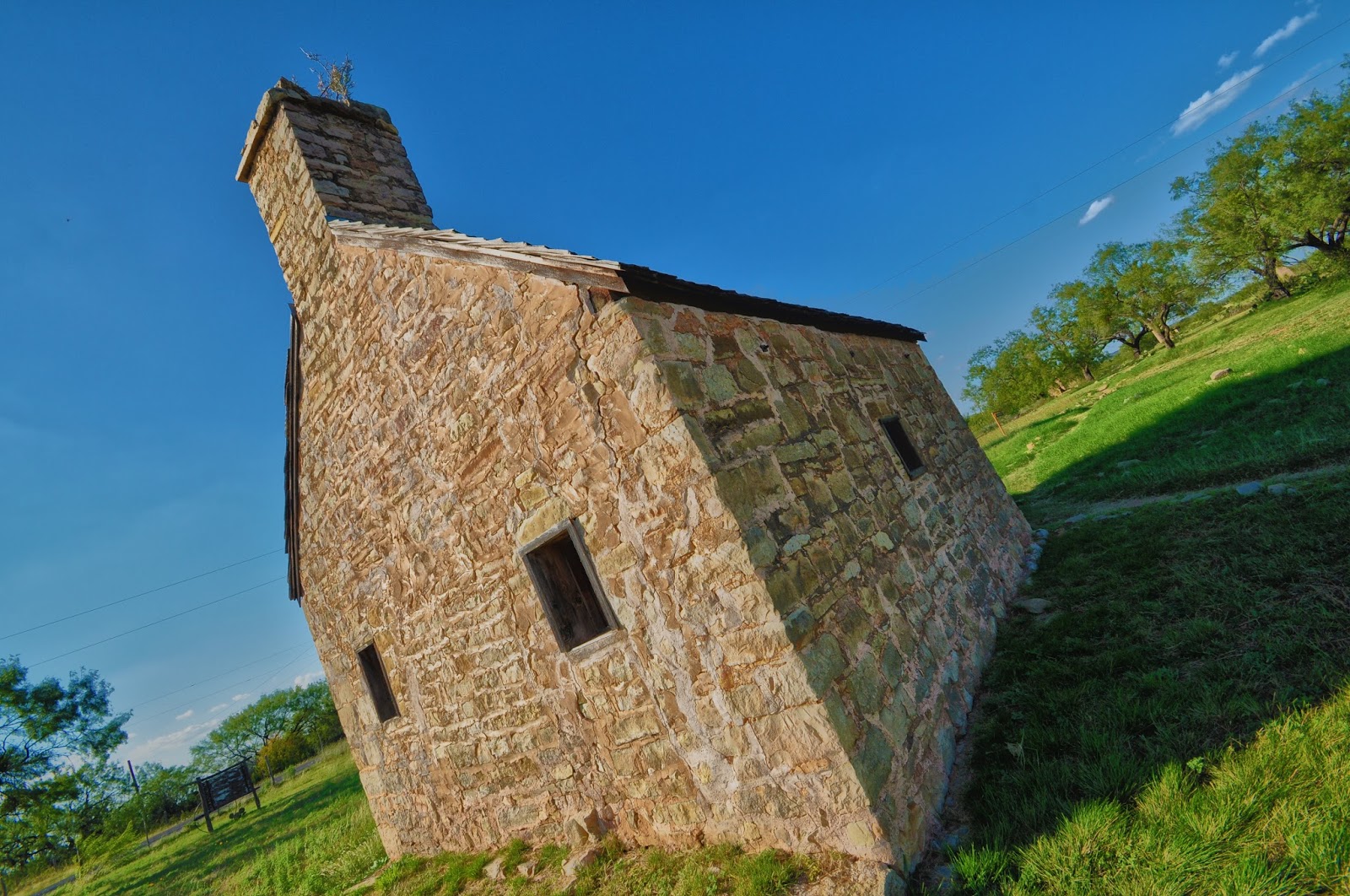
Now it's just a very photogenic set of chimney ruins, along with a small storage building, a gun powder room across the road, and a large commissary with planks of wood still latticing the cold stones with their shadows.  It's a beautiful area and doesn't take long for you to mosey through. I wish it had been reconstructed some more and had some living history type of stuff, like some of the other forts in Texas, but the silent sphinxes of reddish stone tell their own muted stories if you listen closely enough in the never ending wind. 

As I walked out of the shade of the commissary I happened to look over and froze in my tracks. In the distance, through the waves of shimmering grass I saw the image of a white buffalo. It only took me a second to realize it was just a target, propped up against a pile of dirt but for a split second I had a feeling of what it must have been like to be a Comanche riding through the wilds of this land of infinite hostilities and happening upon a lone white buffalo grazing in the cool of the evening. The Comanche held the white buffalo to be sacred. So perhaps this will be a bit of good luck for me. Or it may mean nothing at all. But for some odd reason I felt like I was looking upon some strange ghost of the past as I walked the Phantom Hill and gazed upon a sacred creature. I looked at him. He looked at me. We both recognized something of the other in each of us. The moment stretched out in silence as we nodded to each other in respect. Then the gunfire of hunters rattled off in the distance. 

And I woke up.


copyright Ben Friberg, 2016

Thursday, October 20, 2016

The Horror, The Horror, The Horror...

As Halloween looms before us, I've decided to scrawl down a few of my favorite horror movies starring my favorite horror actor, Bela Lugosi to share with the class. I am not a big fan of what passes for horror films in these days of torture porn. But I love the classic films from the 20's, 30's and 40's; the black and white dreamy fairy tales of a bygone age. The subject matter is still pretty gruesome when you actual stop and consider the components of the plot you are watching, but it's far more restrained and enriching than anything that passes for terror these days. They were usually shot far more creatively too since the censors kept them from showing so much. Restraint bred creativity. 

I was first turned onto to these classic tales back in elementary school when I happened upon a series of books by Ian Thorne, each slim volume chronicling the different horror films broken down into subject - Dracula films, Frankenstein films, King Kong films, Mad Scientists, etc. Then the magic of home video helped me at last watch the films I'd been reading so much about. Lon Chaney Sr. and Bela Lugosi were my favorite actors from all these films, but Lugosi stands out with more actual horror titles to his name. Chaney, though only now remembered for a handful of horror films, actually made far, far more dramas than horror. So here are a few of Lugosi's best. If you haven't watched much in the way of classic horror, hopefully this will help get your butt onto the couch and get them through Netflix.


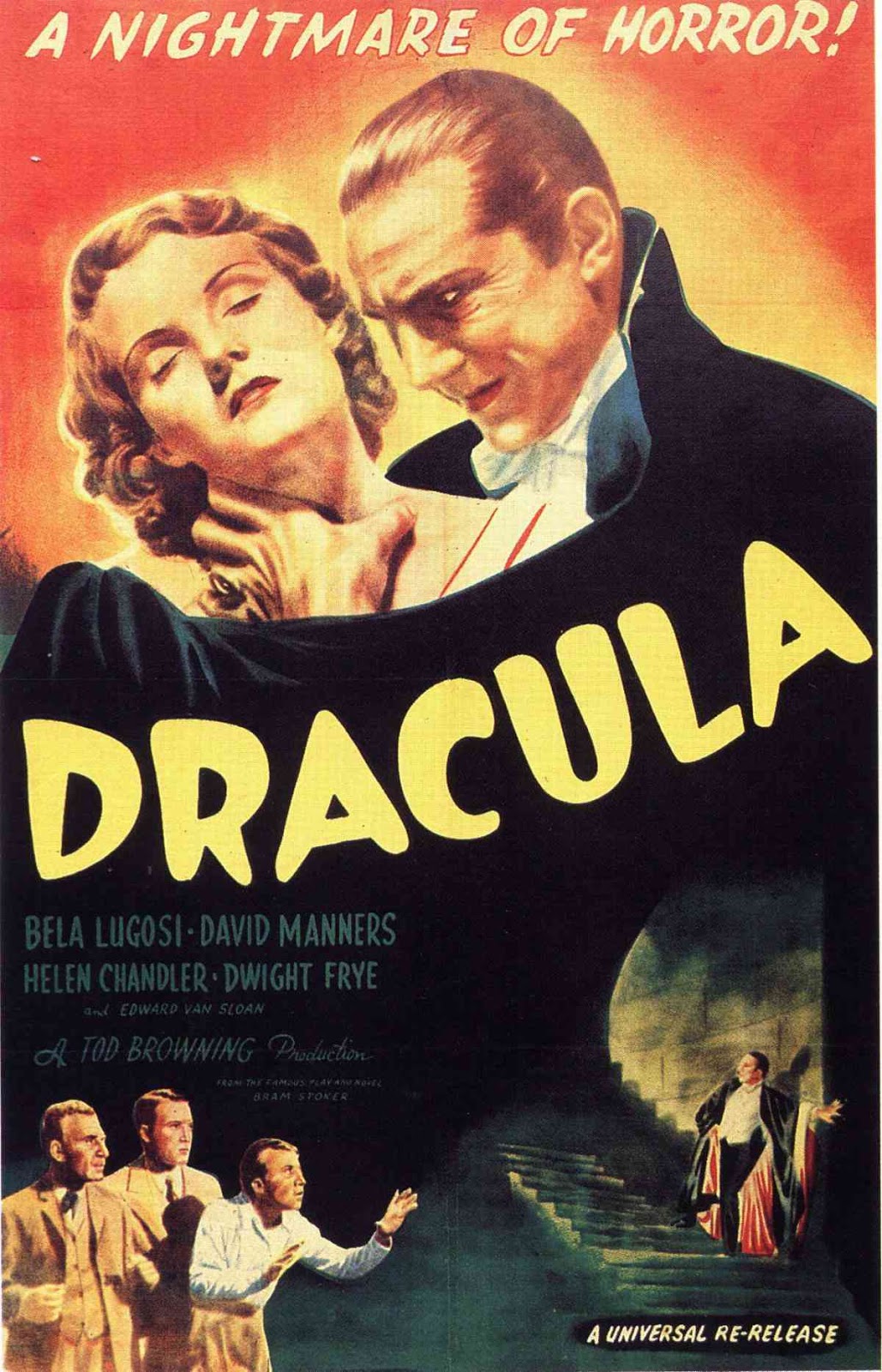
Dracula (1931)

This was the first horror film I saw as a child. I can still remember the excitement I felt after finally trailing down a copy at our local video store when I was in the 4th or 5th grade. I had read about the film over and over in the little monster film books by Ian Thorne that I repeatedly checked out from our school library, pouring over the black and white pictures and soaking up all the atmosphere that seemed to ooze from every torn page. They were fairy tales to me, not horror, even darker Brother's Grimm tales and just as poetic. So I could barely contain myself when I found the vhs copy. I even remember crawling all over the easy chair in antsy anticipation as I waited for the copyright warning to end and the film to begin, hoping that it wasn't going to be too scary, hoping that watching it during the day would keep nightmares at bay. I needn't have worried. Dracula was too dated to be scary even to a 10 yr old, but it WAS fascinating. 


The first 15 minutes are still genuinely creepy, even 80 years after the film was released. Dark, atmospheric, there is no musical score. Only a chilling silence with the fizzles and pops of old films which add character. Every once in a while a lonely wolf howl or squeak of a bat will lunge out and make the silence even more frightening, like a dream stalking it's victim, ready to pounce. Lugosi's performance is still powerful - the first time you are introduced to him, he has just awoke from his undead sleep and is silently walking through the crypts of Castle Dracula. No words. Only his magnetic eyes and the squeaking of rats. Great stuff. I think the first 15 minutes can easily stand up to anything made today for atmosphere and creepiness. Mythic. 


But once the story leaves Transylvania it all goes down hill. The script from there on out follows the stage play version of the classic tale, NOT the book by Stoker. The Great Depression prohibited much money being spent on a horror film when Universal's CEO didn't like them in the first place. This was before horror films became a regular staple of the studio system. Most "horror" films from the 20's were actually mysteries where the "supernatural" element was explained away at the end. Somewhat like an early Scooby-Doo. Dracula was the first to not have the vampire turn out to be a person in disguise. Its producers were taking a real chance on whether the public would be open to watching a film about such outlandish superstitious creatures. So it was not given much money compared to other films Universal was making at the same time. 


As a result, the 2nd half of the film feels like a filmed stage play. It has a few iconic moments but it really drags on pacing, the lack of music now becomes a hindrance, and most of the actors and lines are forgettable. The two romantic leads are pretty lousy in fact. Helen Chandler as Mina is the most bloodless and annoying damsel in distress of all Universal horror films. 


BUT... Lugosi and Dwight Frye as the madman Renfield make it worth watching. Lugosi is still the best Dracula ever put on film and Frye is still the best Renfield ever put on film. His maniacal laughter and crazed eyes looking up at the camera from the hold of the death ship is burned forever in my mind.


Edward Van Sloan sets a high bar for all Van Helsings that would come on down the bloody road. He is more than a match for Lugosi's elegant satanic lover. 


So, I would still highly recommend Dracula for lovers of vampires and horror, just to see where it all began - and for that first 15 minutes of pure mythic Gothic atmosphere that spawned all the vampire movies made since. If you are a fan of film history and classic horror like me, you won't be disappointed.


White Zombie (1931)

White Zombie was one of Lugosi's first films after Dracula. It's a bleak fairy tale of Haitian Voodoo preying upon Purity and Innocence. Lugosi plays the aptly named Murder Legendre, a plantation owner who turns his enemies into undead slaves as grist for his sugar mill. Zombies, before Night of the Living Dead, were actually creatures of Haitian slave folklore. Voodoo masters could supposedly use magic or drugs to transform their victims into shuffling, mindless slaves. They could sometimes be dead but most of the time they were just brain dead victims with brains fried by drugs but still physically alive and very susceptible to suggestion. The brain eating corpse of modern day Zombie fiction didn't come about until the 1960's.

When a rather stupid young couple come to Haiti to be married by a mysterious benefactor, Charles Beaumont, the wife quickly becomes the lustful focus of both Beaumont and Legendre. 

Beaumont makes a deal with the devil to make her his own and Legendre makes her the White Zombie of the film. The not too subtle subtext is that she will be a sex slave for one of them if she isn't rescued by her love. But Beaumont soon learns he has bit off more than he can chew with Legendre and it's up to a bumbling missionary to save everyone from becoming the zombie servants of the satanic voodoo master.


 Great sets (cobbled together from Universal's Dracula and other films), creative camera work, creepy lighting, striking zombie makeup, this pioneer of the zombie genre (the very FIRST zombie movie) is really a fairy tale gem. Except that most of the cast can't act worth a flip. In fact, I think the protagonists are the real zombies of the story. Boring and insipid. Lugosi and his hapless henchmen are the real the color of this production. But it's still more than worth watching for all of Lugosi's scenes and to soak up the voodoo dreamscape that the producer's managed to create on a very low budget. For all my metal head friends out there, the band White Zombie, of course, lifted their own name from this film. For any fan of horror or a real connoisseur of the zombie genre, this little gem is a real treat to watch and another devilish good role for Lugosi to chew on.


Island of Lost Souls (1932)

I was asked by a friend what my favorite horror film of all time was. After mulling it over a bit, I came to the conclusion that it was a battle between this film and the 1925 film version of the Phantom of the Opera. But I think Island of Lost Souls wins by just a hair because it's a sound production and has such fantastic one liners.


Island of Lost Souls is an adaptation of H.G. Wells' classic scifi horror novel, The Island of Dr. Moreau. This is by far the best film adaptation. The other two, the most recent with Val Kilmer and Marlon Brando, are pretty lame. 

The movie follows Wells' basic story line of a man trapped upon the island of the mad scientist, Dr. Moreau, played in a wonderfully over the top performance by Charles Laughton. In order to give evolution a helping hand, Moreau is using surgery to mold animals into humans. It proves a horrifically painful process, more torture than science. The beast flesh proves too stubborn though and all his experiments have failed. 

Even the more successful ones begin falling back into their previous animal natures. He lords it over the failed experiments like a god, devising commandments for them to follow and repeat like a mantra: "Not to spill blood, that is the law, are we not men?" "HIS are the hands that heal, HIS are the hands that make, HIS is the House of Pain...." The poor creatures are headed up by a very hairy Bela Lugosi who gives a great performance as the Speaker of the Law. You can hear the howling wail of a chained animal in his voice when he speaks of the House of Pain, the birthplace of all Moreau's creations. So the maniac doctor lords it over his island as a god, in a tongue in cheek mockery of organized religion, until a shipwrecked sailor comes ashore and upsets his diabolical little cosmos...


H.G. Wells hated this film but I think it's one of the very best adaptation of any of his books. Maybe THE best. It really captures the revolting horror of Wells' novel while also veering off into left field with gleeful one liners masterfully delivered by Laughton's chubby little satanic Moreau. Laughton's skill really creates some of the best moments in all horror films with his performance here. The subplot of Moreau trying to force the shipwrecked sailor, and later that sailor's fiancee, to mate with the more advanced of the animal creatures, is both zany, frightening, and touching when you see the panther woman struggle with becoming human and the womanly emotions that come along with that experience. It's the love that dawns in her animal heart that eventually saves the day. The sets, lighting, makeup and cinematography are all superb.


Recently restored and easily available on dvd and bluray, I highly recommend you do what you can to watch this nightmarish tale of an inhuman surgeon creating man in his own bestial image. 


Murders in the Rue Morgue (1932)

"A lady in....distress?" - Dr. Mirakle


Dracula might have catapulted Lugosi to fame but his portrayal is stiff and shuffling compared to the melodramatic scenery chewing in this puppy. And I love to watch Lugosi chew some scenery!


Murders in the Rue Morgue is loosely based on the classic short story by Edgar Allan Poe. It's pretty much the first modern detective story. Sherlock Holmes and other famed detectives would draw their inspiration from Poe's protagonist - C. Auguste Dupin. However, other than including the incredibly violent murder that Poe dreams up, the film bears little resemblance to the original story. But what a wild and gloriously twisted revision it is! 


Lugosi stars as the sinister and wild haired Dr. Mirakle, a scientist who travels about in carnivals with the ape Erik in tow, trying to spread the gospel about Evolution. It is gradually revealed throughout the film that his great obsession is to blend the blood of Apes with the blood of Mankind to prove their mutual ancestry. Though it never comes right out and says it, essentially the film is about a mad scientist trying to hook his ape buddy up with an unwilling human female. Bestiality is still pretty taboo - imagine how taboo this was in 1932! But first he has to make sure the human female's blood is pure. Scientifically this makes no more sense than trying to breed an ape with a woman anyway, but I guess in this film apes can only cross-species procreate with virgins. At least that seems to be the message as Dr. Mirakle kidnaps prostitute after prostitute only to find their wombs useless - their blood "black as their sins." The women all die of shock and blood poisoning, so down through a trap door into the river you sluts go! Of course now the virginal damsel in distress must be saved by her medical student lover, Dupin, from a fate worse than death in the arms of a very hairy Casanova. And over all this insane tableau, the malevolent face of Lugosi leers with voyeuristic glee. 


Film historian Gregory Mank describes Bela's performance as "Satan playing Shakespeare." I couldn't describe the performance any better. It's probably my favorite character of Lugosi's. Creepy, driven, lascivious, yet still capable of treating his ape companion with empathy, and capable of agonizing over the women he has had to murder to feed the juggernaut of Science. Bela owns this movie.


Every other character and actor in the film is forgettable, though Sidney Fox is pretty hot as the heroine. Terrible actress in this movie, but still good to look at. The cinematography and sets are brilliantly done. Very German Expressionist in style. Such a shame there couldn't have been a more talented ensemble cast. Married with Lugosi's perfection and set in a bizarro world of bleak Parisian alleys and diabolical basement laboratories, better actors could have made this film a real classic. Now I just watch it for the scenes with Lugosi. I still highly recommend it for any fan of early horror cinema. It's a visual treat and serves up a feast of some of Lugosi's best moments.